LA Opera The Magic Flute Review
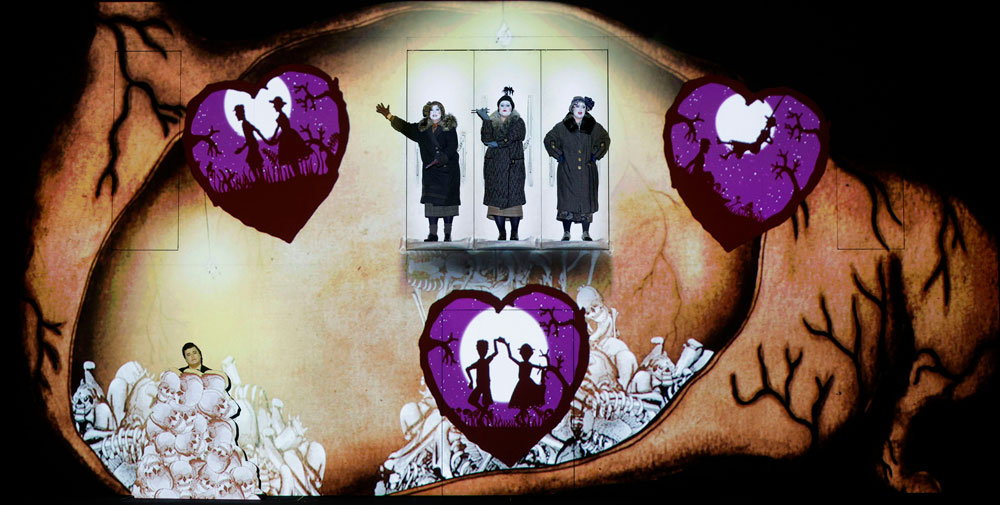
LA Opera’s production of Mozart’s The Magic Flute is an immersion of pure opera and whimsical animation within a silent-film tableau. The opera’s musical styles combine Italian opera, symphony, folk songs, as well asTurkish music. James Conlon, in his final opera as Music Director, amplifies the audiences’ emotional engagement and appreciation. Paul Barritt’s fantastical visual designs synchronize with the singers’ movements as they interact with animated creatures, landscapes, and also magical effects. Esther Bialas’ minimalist stage design provides openings from which the performers appear, disappear and float amidst the graphic projections.
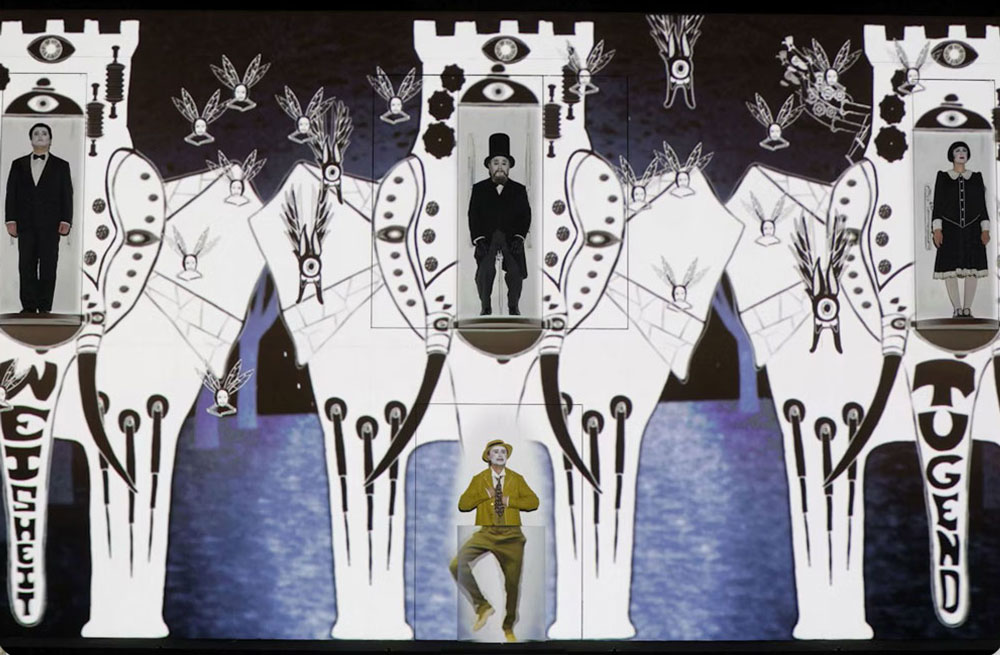
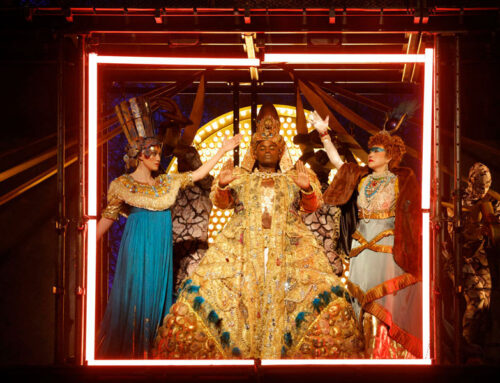
At top Miles Mykkanen as Tamino, Kwangchul Youn as Sarastro and Sydney Mancasola as Pamina with Kyle Miller bottom as Papageno in LA Operas 2026 presentation of The Magic Flute. Photo Cory Weaver
The Characters of The Magic Flute
Tenor Miles Mykkanen is Tamino who, carrying bells and a magic flute, sets out to rescue his lady love. The beautiful princess Pamina is performed with grace and strength by soprano Sydney Mancasola. Soprano Aigul Khismatullin as Queen of the Night captivates the audience with her stunning arias as she thwarts the lovers. Papageno, the bird catcher, performed by baritone Kyle Miler, provides warmth and humor as a Buster Keaton style silent-film clown. Tenor Zhengyi Bai is the ominous Monostatos whose makeup is reminiscent of F. W. Murnau’s Nosferatu. Bass Kwangchul Youn is the more elegant, in top hat and tuxedo, Sarastro, High Priest of Isis.
Symbolism and Philosophy
References to mystical Masonic numerology and Isis, the Egyptian goddess of life, magic, and motherhood, are woven throughout the opera’s imagery. The Magic Flute evokes the age of Enlightenment and its humanist principles and philosophical ideals. Mozart reminds us that we can embrace peaceful coexistence, foster equality and strive for harmony and benevolence through intelligence, work, and art. Sarastro puts Pamina and Tamino through dead defying spiritual trials that enable them to evolve as loving souls and equals. Even Papageno, who prefers to eat and drink, becomes his fullest self as he desires and unites with a wife, Papagena.
In his reflective essay about choosing The Magic Flute as his farewell work, James Conlon writes: “The Founding Fathers of our country were deeply devoted to an Enlightenment vision of government. They envisioned the equality of all human beings, the birthrights they should enjoy, and the design of a fair and representative government to which we owe our now 250-year history. But in today’s world, the subject of our young 1776 constitution and government, as yet an imperfect union, is the subject of much reassessment.”
Supporting Cast
Soprano Diana Newman, mezzo-soprano Katie, and mezzo-soprano Meridian Prall performed the Three Ladies. Members of LA Opera’s Domingo-Colburn-Stein Young Artist Program include soprano Emily Damasco as Papagena, tenor Nathan Bowles as the First Armored Man, and baritone Hyungjin Son as both the Speaker and the Second Armored Man. Three delightful members of the Los Angeles Children’s Chorus appear as the Three Spirits: Elle Thorman, Clark Chua, and Alexa Ho.
The Magic Flute is thoroughly enchanting and magical and reinforces its reputation as one of the world’s most popular and beloved operas. See the LA Opera The Magic Flute Feature.